ARMS : Attention Reasoning Memory Store
A Spatial Memory Fabric for AI Systems
Position IS Relationship
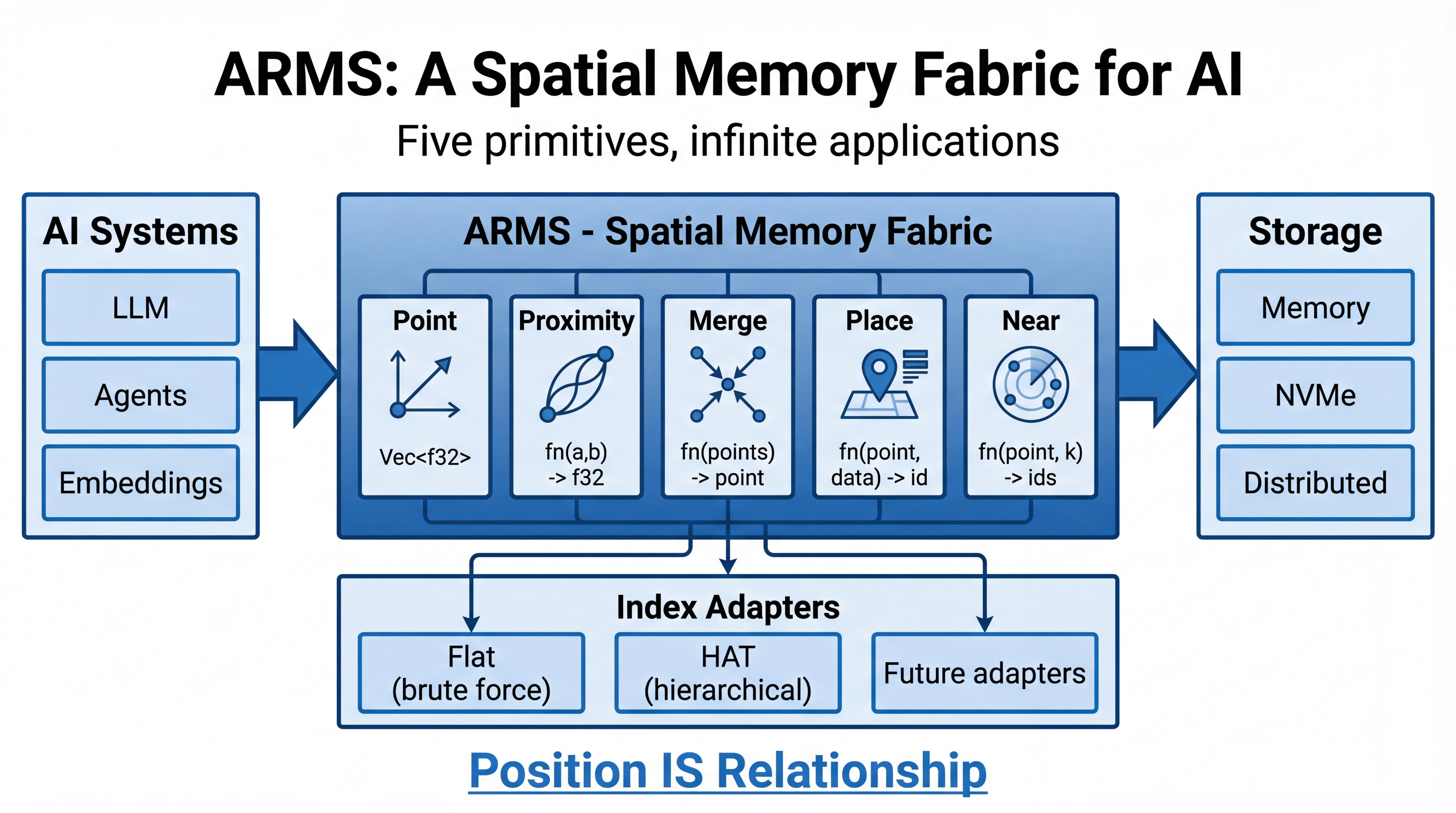
ARMS stores attention states at their native coordinate positions—no lossy projections
The Memory Problem
Current AI memory approaches all lose information at each step
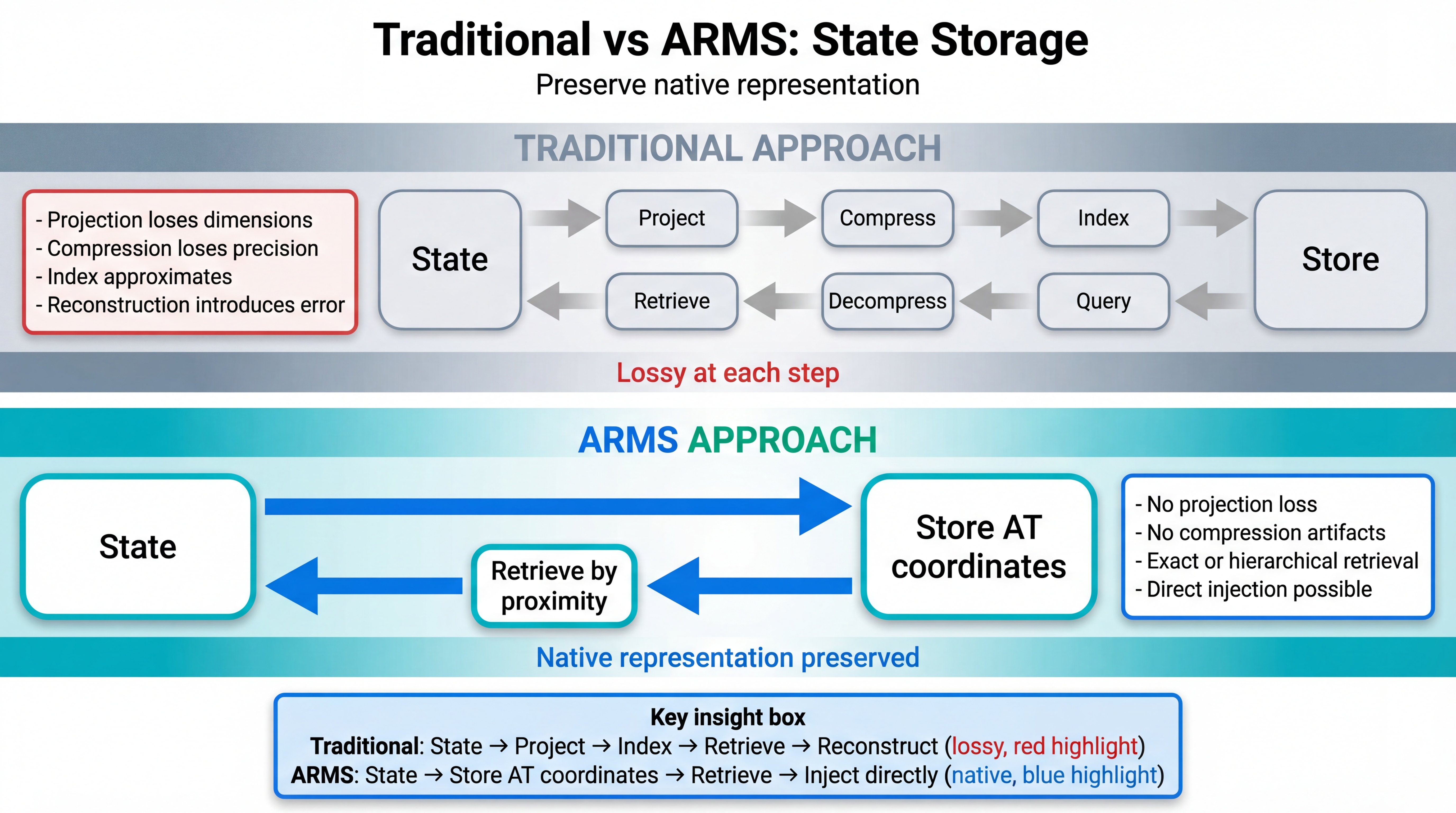
Traditional Approach
Lossy at each step
ARMS Approach
Native representation preserved
The Five Primitives
Everything in ARMS reduces to five fundamental operations
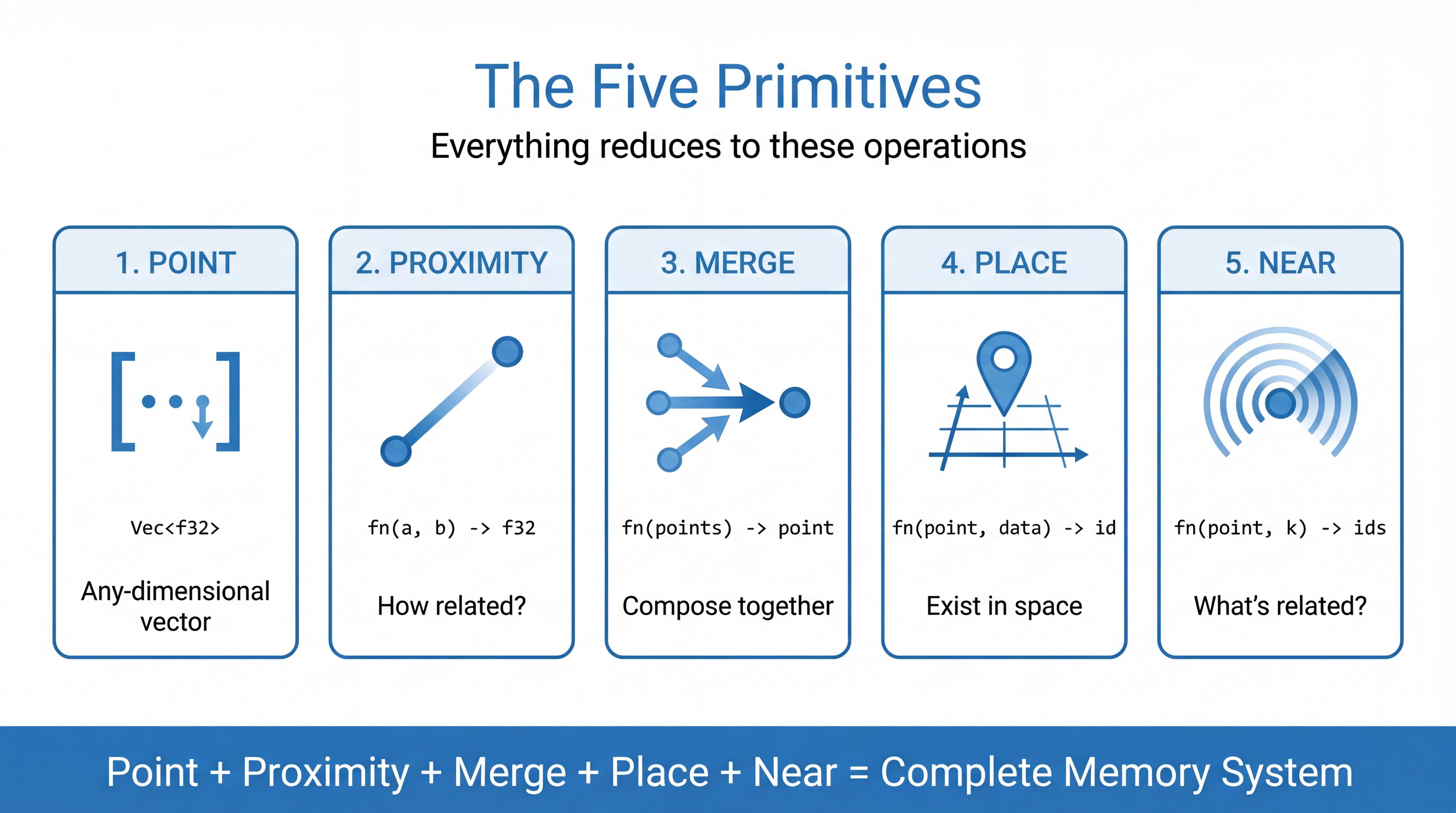
| Primitive | Type | Purpose |
|---|---|---|
| Point | Vec<f32> | Any dimensionality |
| Proximity | fn(a, b) -> f32 | How related? |
| Merge | fn(points) -> point | Compose together |
| Place | fn(point, data) -> id | Exist in space |
| Near | fn(point, k) -> ids | What's related? |
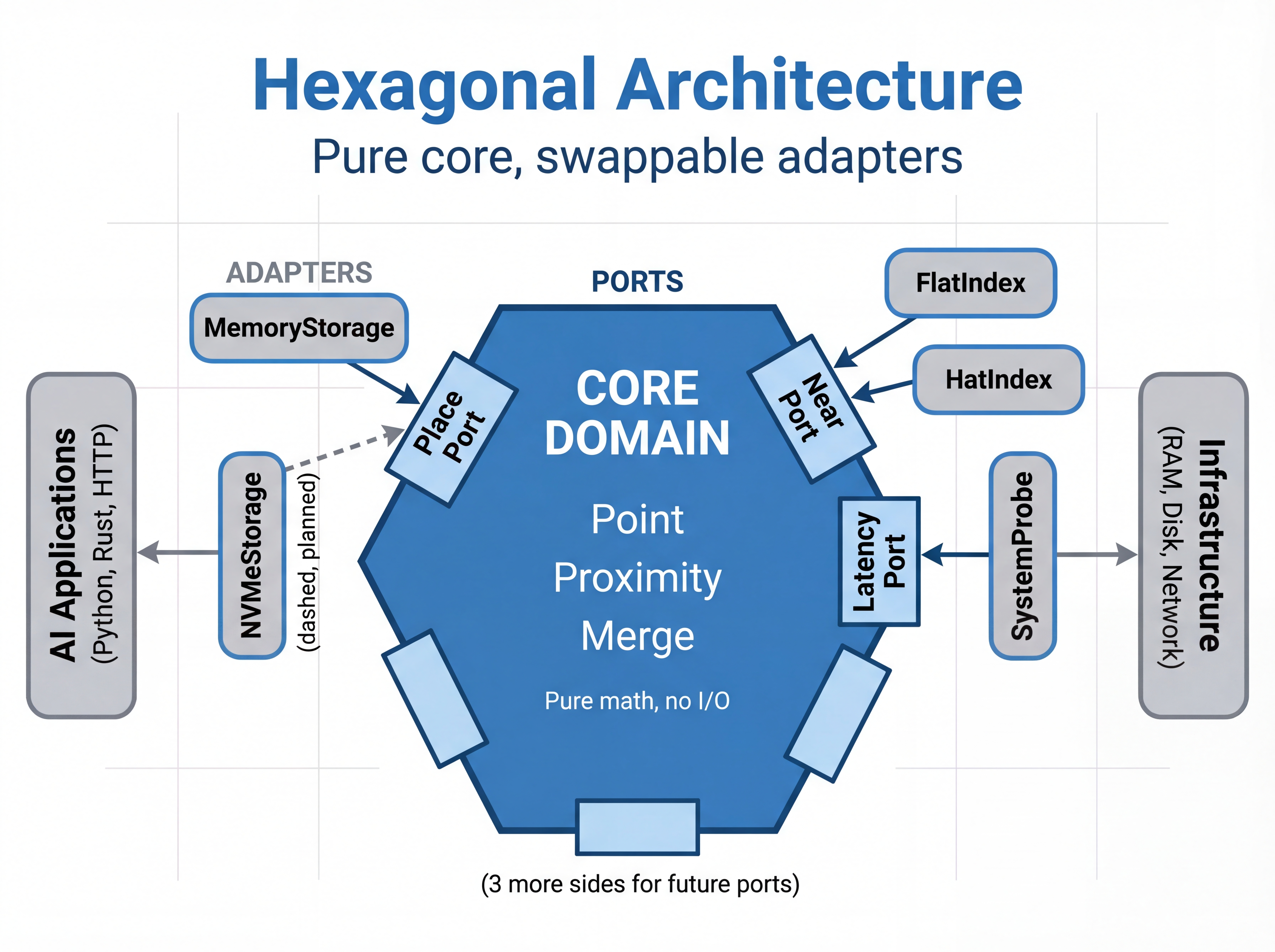
Hexagonal Architecture
ARMS follows a ports-and-adapters architecture. The core domain contains pure math with no I/O.
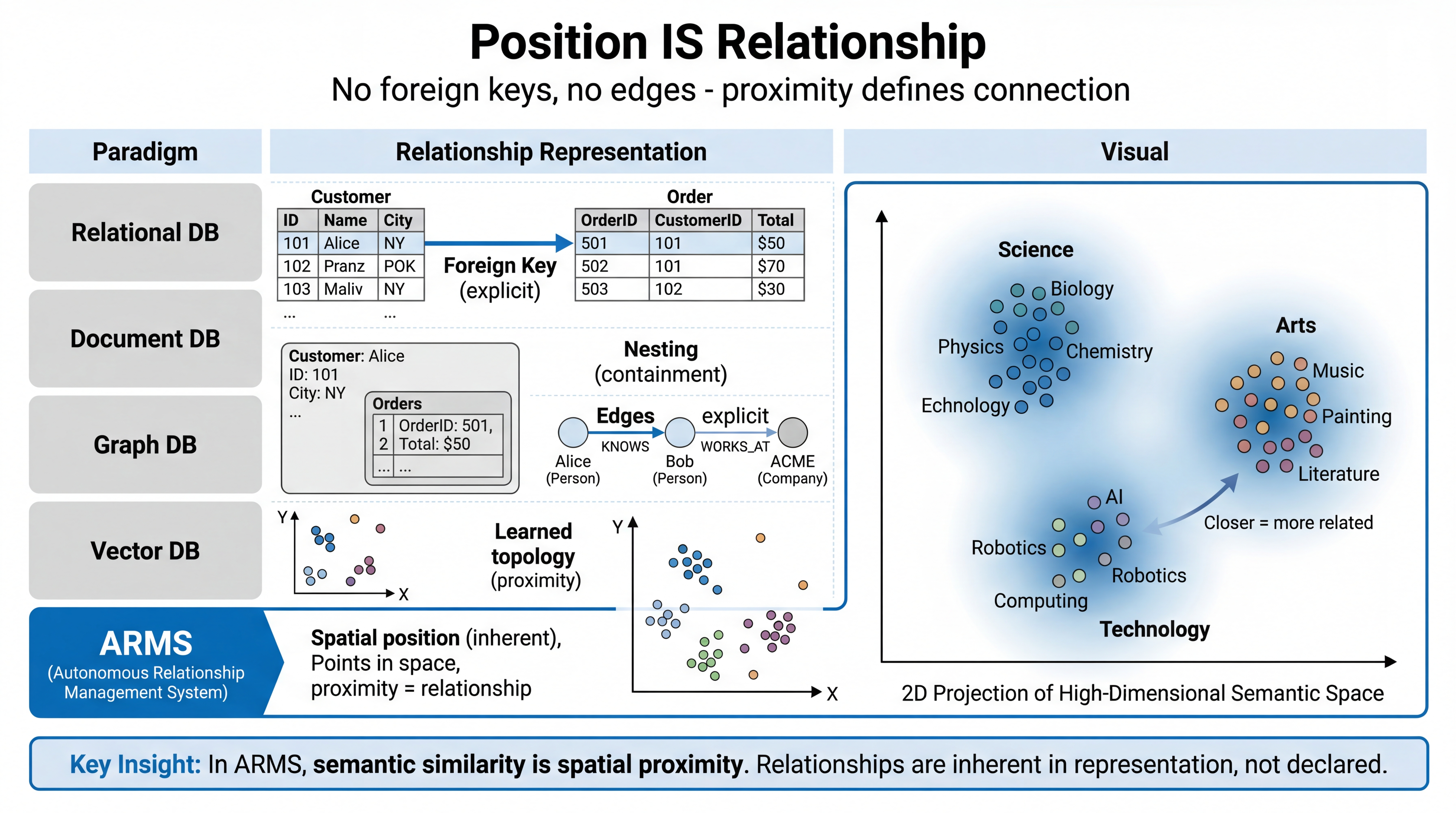
Position IS Relationship
Unlike databases that require explicit relationships through foreign keys, ARMS operates on a fundamental principle: proximity defines connection.
Points that are close in high-dimensional space are semantically related. No explicit links needed—the geometry itself encodes meaning.
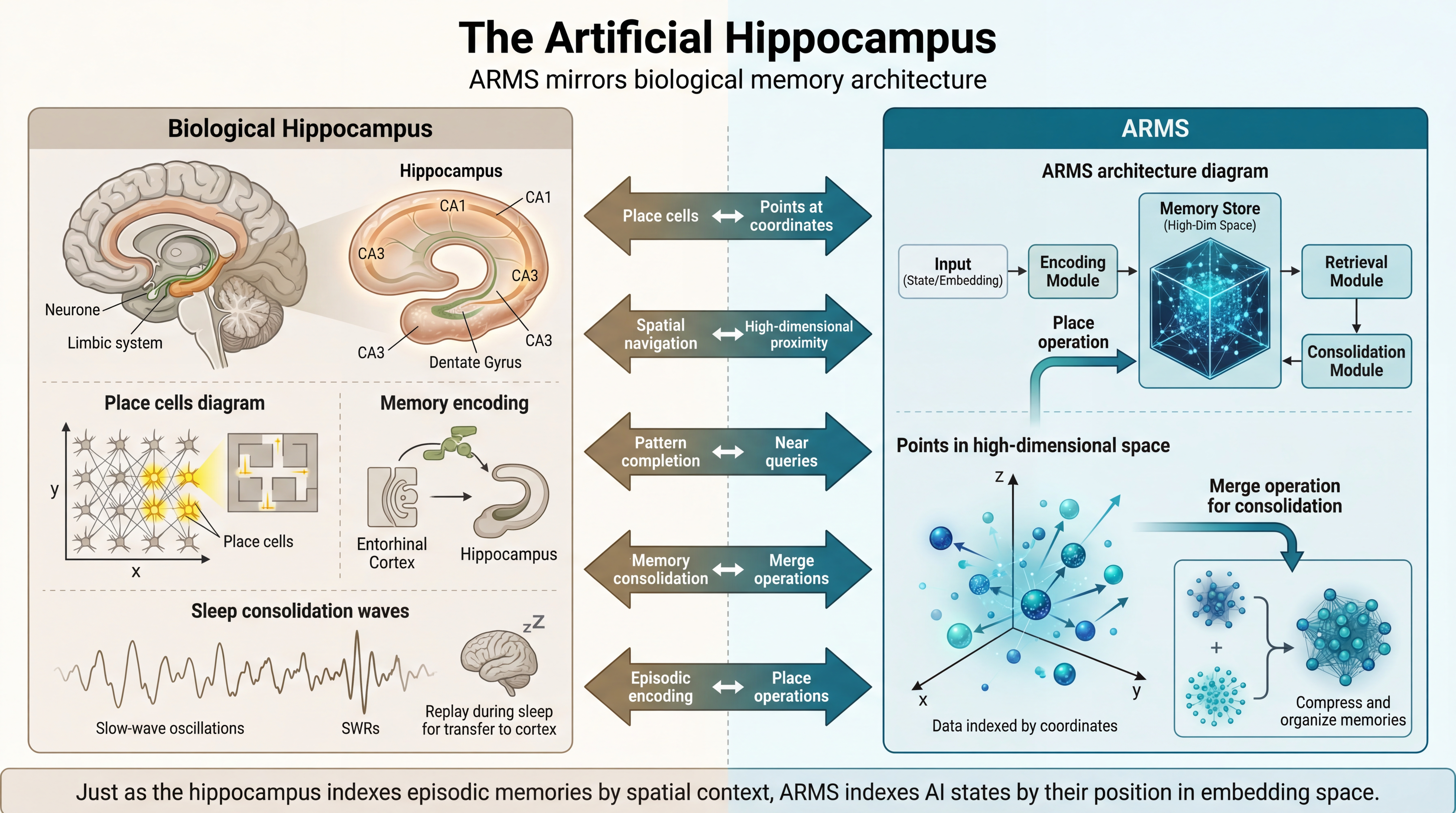
An Artificial Hippocampus
ARMS functions as an artificial hippocampus for AI systems, mirroring how biological memory works.
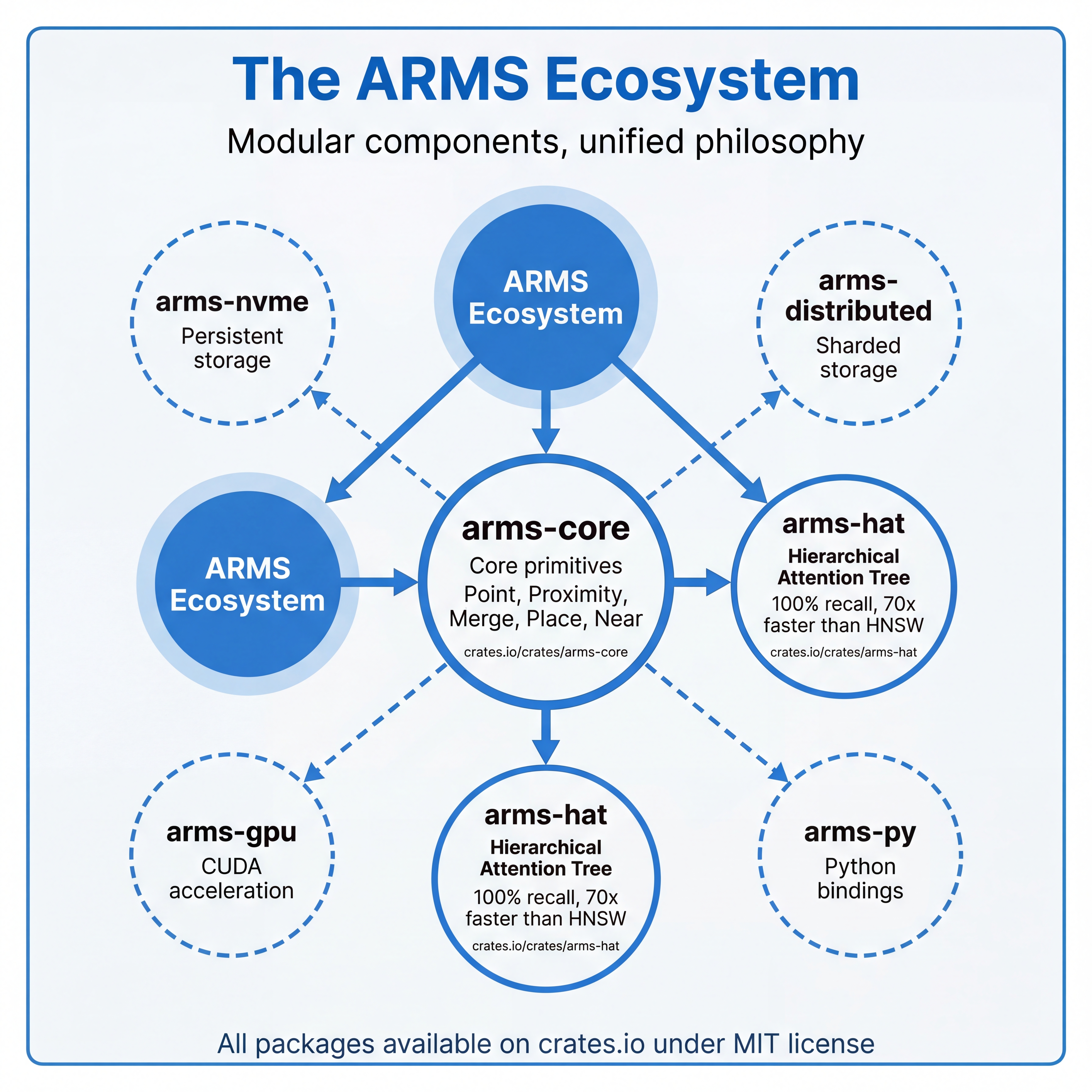
The ARMS Ecosystem
Modular components for building AI memory systems
Quick Start
Get started with ARMS in Rust
use arms_core::{Arms, ArmsConfig, Point};

// Create ARMS with default config (768 dimensions)
let mut arms = Arms::new(ArmsConfig::new(768));

// Place a point in the space
let point = Point::new(vec![0.1; 768]);
let id = arms.place(point, b"my data".to_vec()).unwrap();

// Find nearby points
let query = Point::new(vec![0.1; 768]);
let neighbors = arms.near(&query, 5).unwrap();Citation
@article{arms2026,
  title={ARMS: A Spatial Memory Fabric for AI Systems},
  author={Young, Andrew},
  year={2026},
  url={https://research.automate-capture.com/arms}
}
Ready to Build AI Memory?
ARMS is open source and ready for experimentation.